“Thoughts, Institutions, and Orders Across the Indian Ocean”The 3rd International Conference on Exchanges and Mutual Learning among Civilizations in the Indian Ocean Region Opens at Peking University
From October 8 to 12, 2026, Peking University hosted the 3rd International Conference on Exchanges and Mutual Learning among Civilizations in the Indian Ocean Region, themed “Thoughts, Institutions, and Orders Across the Indian Ocean.” The conference was jointly organized by the Research Center of Eastern Literature, the School of Foreign Languages, the Institute of Oriental Studies, and the Institute of Country and Region Studies at Peking University, in co-sponsorship with the Chinese Academy of History’s “Endangered Disciplines” Support Program (Peking University’s “Ancient Indian Civilization Studies”), the Academy of Religious Culture at Peking University, the Department of History at East China Normal University, the Shanghai Institute for Global South Studies, the Global South Field Research Laboratory at Fudan University, and the Fudan Development Institute.
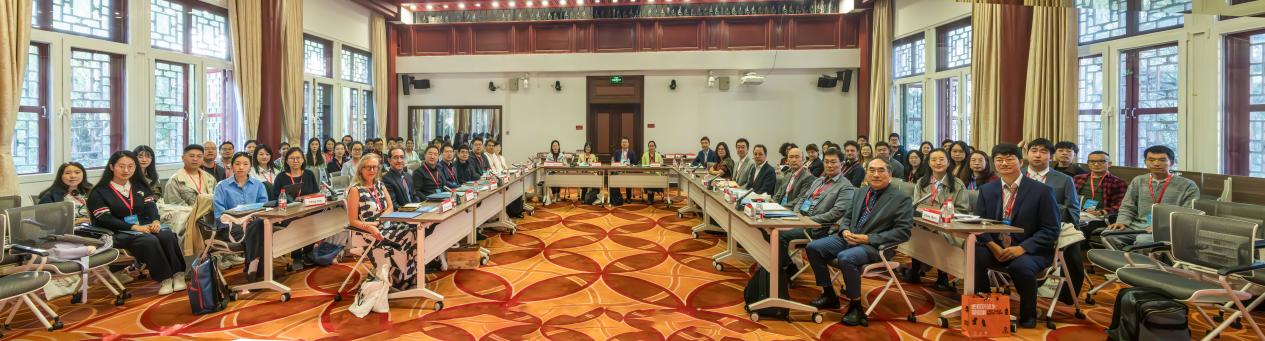
Marking the 80th anniversary of the founding of Oriental Studies at Peking University, the conference brought together nearly 100 scholars from overseas institutions such as the University of Oxford in the United Kingdom, Northwestern University in the United States, and Allameh Tabataba'i University in Iran, alongside counterparts from domestic universities including Peking University, Tsinghua University, and Fudan University. Over the course of the conference, participants engaged in rigorous academic dialogue on the historical evolution of thoughts, institutions, and orders in the Indian Ocean region and their cross-regional connections.
The opening ceremony was chaired by Zhang Minyu, Tenured Associate Professor in the School of Foreign Languages at Peking University. Professor Li Bo, Deputy Director of the Office of Humanities and Social Sciences at Peking University, noted that the conference series had been jointly initiated by the research teams of several Major Projects of the National Social Science Fund of China. He described it as a vivid example of how major grant projects contribute to the academic community and how organized research promotes both the preservation and transmission of “endangered disciplines” and cutting-edge interdisciplinary research. He also commended the School of Foreign Languages for its solid work on major grant projects.
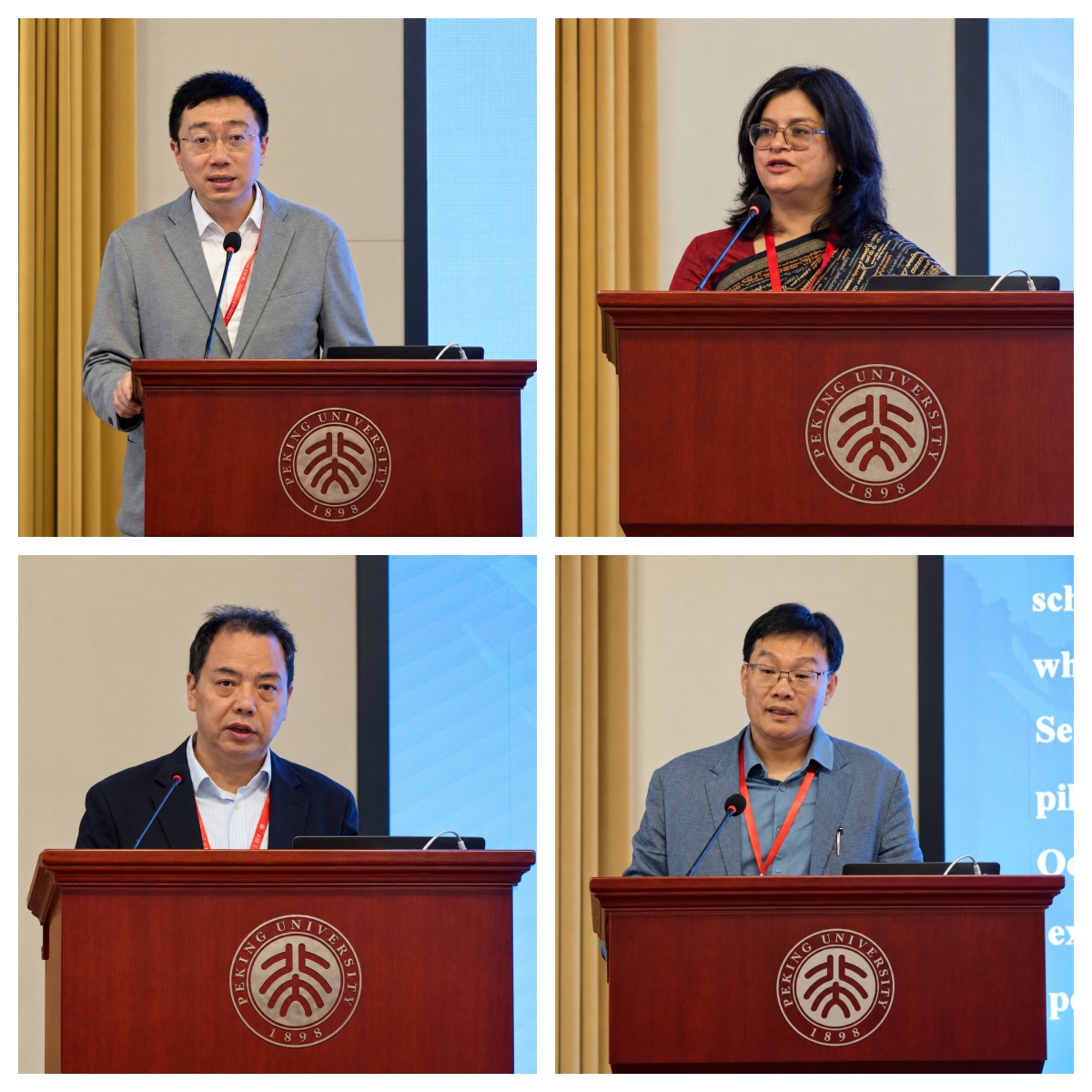
Professor Chen Ming, Director of the Research Center of Eastern Literature and Dean of the School of Foreign Languages at Peking University, quoted the saying “less commonly studied disciplines should not be neglected and endangered fields of scholarship should not disappear” as he reviewed the eight-decade journey of Oriental Studies at the university, during which scholars had passed the torch from one generation to the next. He said that the conference opened up new academic frontiers in Indian Ocean studies and put the spirit of exchanges and mutual learning among civilizations into practice.
Professor Zan Tao, Deputy Director of the Institute of Country and Region Studies at Peking University, emphasized the importance of taking “China as method” in studying the Indian Ocean and developing an independent knowledge system for country and region studies. He noted that its particular significance lies in understanding the world beyond China and reconsidering China’s own historical circumstances as both a continental and a maritime country.
Drawing on Rabindranath Tagore’s visit to China, Ananya Jahanara Kabir, Professor at King’s College London and a Fellow of the British Academy, observed that the Indian Ocean world had long connected the Indosphere and the Sinosphere, Africa and Asia, and the Atlantic Ocean and the Indo-Pacific corridor. She added that the conference carried forward this rich inheritance with an open and pluralistic outlook.
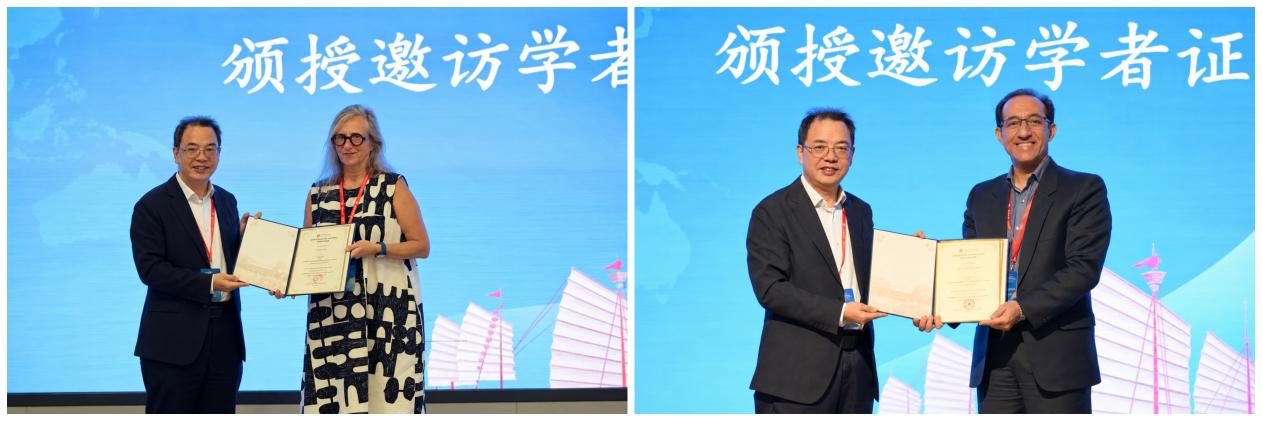
Following the opening remarks, Professor Chen Ming presented certificates to the first cohort of visiting fellows in the “Exchanges and Mutual Learning among Civilizations in the Indian Ocean Region” Visiting Fellow Program.The recipients were Carli Coetzee, Research Associate at the African Studies Centre of the University of Oxford in the UK, and Mohammadamir Jalali, Associate Professor and Chair of the Department of Persian Language and Literature at Allameh Tabataba'i University in Iran.
The subsequent “Meet the Editors” forum was held in three sessions, focusing on disciplinary development, journal development, and academic frontiers. Representatives from the following 11 academic journals in China and abroad took part in the forum: World Religious Cultures; Contemporary International Relations; The Journal of International Studies; Journal of World Peoples Studies; South China Quarterly: Journal of University of Macau; China Muslim; Journal of the Chinese Nation Studies; Historical and Philological Studies of China’s Western Regions; History and Change; African and Asian Studies; and International Journal of Anthropology and Ethnology. Drawing on their editorial practice and research concerns, the participants held in-depth discussions on how to leverage high-quality academic journals as platforms to advance research in relevant fields and promote exchanges and mutual learning among civilizations.
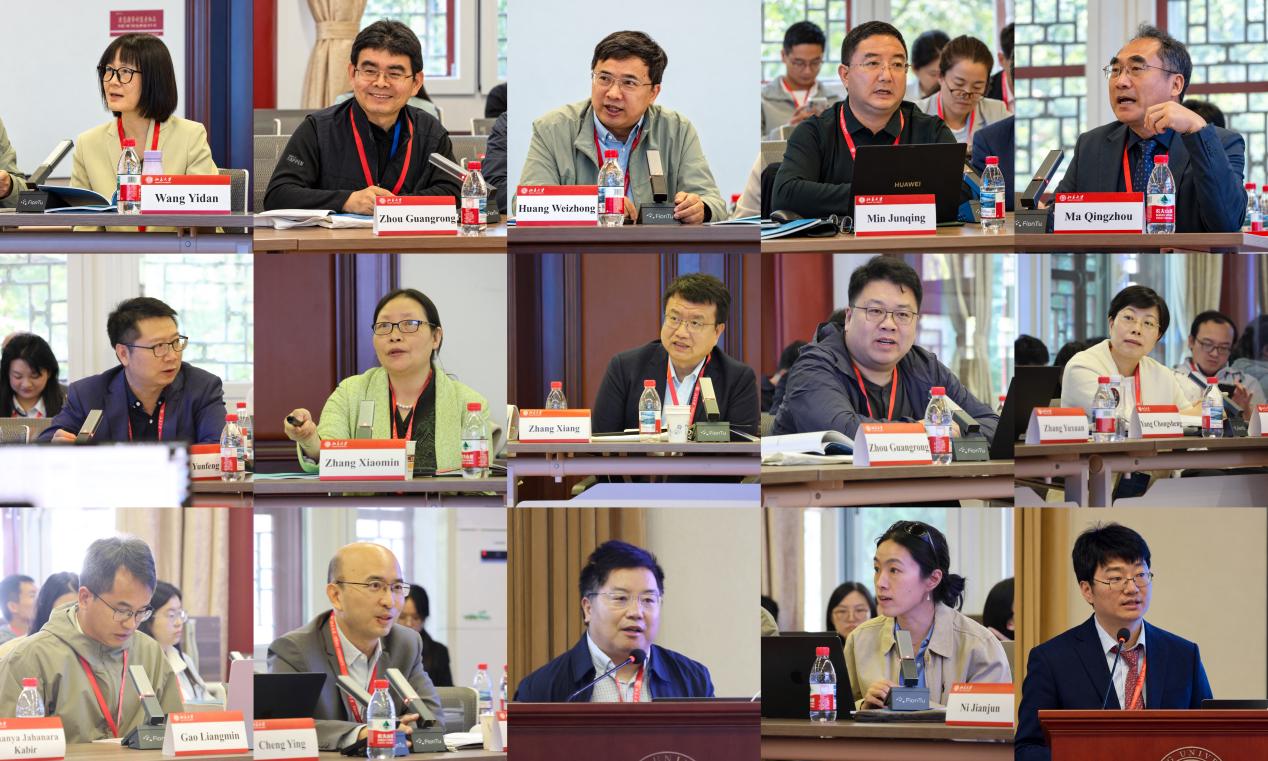
The conference featured 14 panels, where participants examined key topics such as the trans-Indian Ocean transmission and localization of religious beliefs; the cross-cultural dissemination of political thought in the Indian Ocean region; comparisons and connections among political institutions across the Indian Ocean region; and multicultural communities in Indian Ocean port cities. Complementing the panel discussions, four lectures in the “Multi-Civilizational Interaction in the Indian Ocean Region” Lecture Series were held during the conference. The four lectures were delivered by three scholars: Professor Thomas Reuter (Asia Institute, University of Melbourne, Australia); Professor Neha Vora (Department of International Studies, American University of Sharjah, United Arab Emirates); and Associate Professor Joshua Parr Ehrlich (Department of History, University of Macau).
Translated by Huang Ruoxuan